
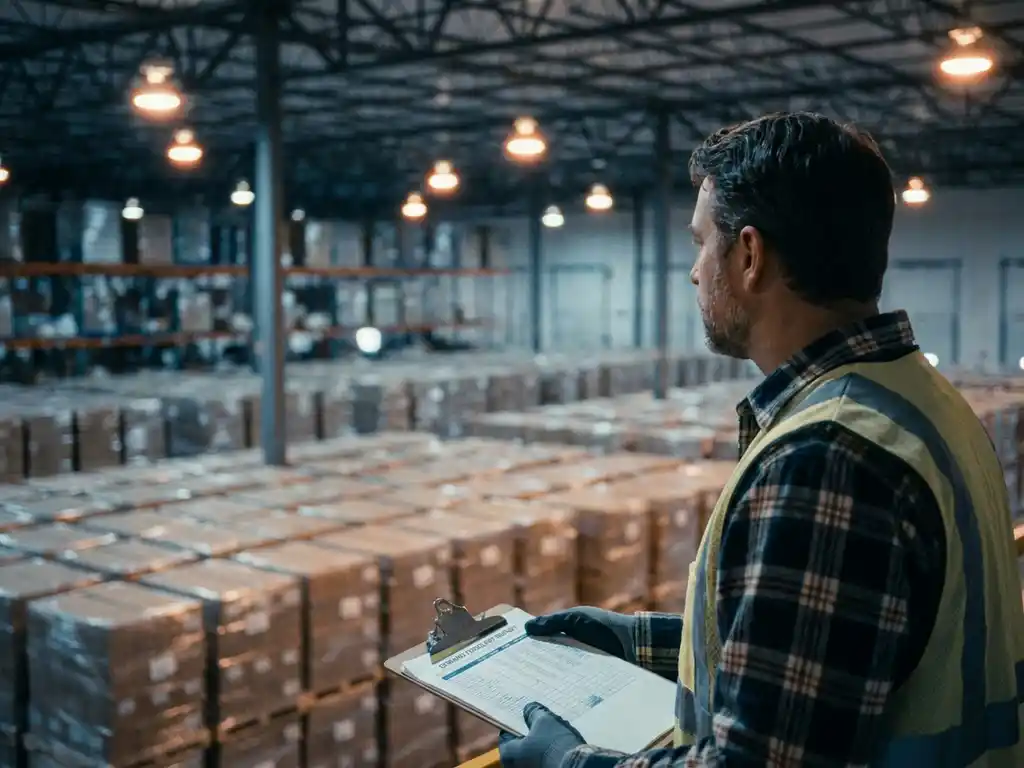
Supply chain optimization has never been more sophisticated, or more dependent on the humans behind it. Algorithms can process millions of data points in seconds, but the decisions that shape supply chain optimization strategies still require something no model can replicate: judgment grounded in context, experience, and accountability. As organizations invest heavily in automation and advanced analytics, a critical question emerges: where does the algorithm end and the human begin?
The answer matters enormously for CFOs managing risk exposure, COOs designing resilient operations, and Supply Chain Directors navigating volatile markets. Getting the balance right between automated intelligence and human decision-making is not a technology problem. It is a leadership and organizational design challenge that directly shapes outcomes across inventory management optimization, demand forecasting, procurement, and distribution.
Where algorithms fall short in supply chain planning
Algorithms excel at pattern recognition and speed, but they are fundamentally backward-looking. They learn from historical data, which means they struggle when the future looks nothing like the past. A geopolitical disruption, a sudden regulatory change, or a major customer shifting their ordering behavior can render a model’s recommendations dangerously outdated almost overnight. Understanding the full scope of what a modern supply chain optimization platform can and cannot do is essential before placing too much trust in any single system.
There is also the problem of context collapse. A demand forecasting optimization model might flag a sharp drop in orders as a signal to reduce inventory, without knowing that a key customer is temporarily pausing purchases due to an internal restructuring, rather than a permanent shift in demand. The algorithm sees numbers. A seasoned supply chain professional sees the relationship, the context, and the correct response.
Additionally, most optimization models are built around a single objective function, whether that is cost, service level, or throughput. Real supply chain decisions involve competing priorities that shift depending on strategic direction, market conditions, and stakeholder expectations. Algorithms optimize within constraints. Humans define what those constraints should be.
The unique value human judgment brings to optimization
Human judgment fills the gaps that data cannot. Experienced supply chain professionals carry institutional knowledge, supplier relationships, and an intuitive sense of operational risk that simply cannot be encoded into a model. This is especially true across the industries we serve, such as Food and Agriculture or Manufacturing, where quality, compliance, and relationship dynamics shape decisions as much as cost and lead time.
Judgment also plays a critical role in exception handling. When a logistics optimization technique surfaces an anomaly or a planning system flags a constraint, it takes a human to determine whether the exception is a genuine problem, a data quality issue, or a signal of something larger. Acting on every system alert without human filtering leads to noise, wasted effort, and eroded trust in the tools themselves.
Perhaps most importantly, humans bring ethical and strategic accountability. Decisions around supplier selection, workforce impact, environmental trade-offs, and long-term partnerships require a level of moral reasoning and stakeholder awareness that algorithms are not equipped to provide. These are not edge cases. They are central to how responsible, competitive supply chains are built. Organizations that take data security and governance seriously as part of their optimization strategy are better positioned to earn and maintain that trust.
How human-AI collaboration improves supply chain outcomes
The most effective supply chain organizations do not choose between human expertise and algorithmic power. They design systems where each amplifies the other. When structured well, this collaboration produces outcomes that neither could achieve independently.
In practice, this means using AI and optimization tools to handle high-volume, repetitive decisions at speed, freeing human planners to focus on higher-stakes judgment calls. A warehouse optimization solution might automatically manage replenishment triggers and slotting rules, while a planner focuses on evaluating whether the overall network design still serves the business strategy. For organizations looking to put this into practice, exploring dedicated smart warehousing solutions can be a strong starting point for building that human-machine balance.
Collaboration also improves when humans are involved in model governance. Planners and supply chain leaders who understand how a model works, what data it relies on, and where its blind spots lie are far better positioned to catch errors and improve recommendations over time. This creates a feedback loop that continuously sharpens both the tool and the team using it.
Organizations that invest in this kind of structured collaboration consistently report stronger performance across key metrics, including forecast accuracy, service levels, and cost efficiency. The technology provides leverage. The human provides direction.
Key supply chain decisions that should stay human-led
Not all decisions are equal candidates for automation. Some carry consequences significant enough, or involve enough ambiguity, that human ownership is not optional. Identifying which decisions belong in this category is itself a strategic choice.
- Supplier strategy and relationship management: Decisions about which suppliers to partner with, how to structure contracts, and how to respond to supplier performance issues require trust, negotiation skill, and long-term strategic thinking.
- Network design and distribution strategy: Changes to a distribution network optimization plan, such as opening or closing a facility, shifting fulfillment models, or entering new markets, carry long-term financial and operational consequences that require executive judgment.
- Crisis response and escalation: When disruptions occur, the speed and quality of human decision-making determine outcomes. Algorithms can surface options, but leaders must choose, communicate, and take accountability.
- Procurement process strategy: High-stakes procurement process optimization decisions, particularly those involving sole-source suppliers, long-term commitments, or ESG considerations, require human oversight and ethical reasoning.
- Trade-offs between cost and service: When optimizing for cost conflicts with serving a strategic customer or maintaining brand promise, that tension needs a human to resolve it with full awareness of business context.
The common thread across these decisions is consequence and complexity. Where the stakes are high and the variables are hard to fully quantify, human leadership remains essential.
Building a decision-making culture in supply chain teams
Technology investments only deliver their full potential when the people using them are empowered to make good decisions. This requires deliberate investment in culture, capability, and organizational design, not just software deployment.
Supply chain teams that perform well in high-complexity environments share a few common traits. They have clear decision rights, meaning everyone understands which decisions they own and which require escalation. They operate with psychological safety, meaning planners feel confident challenging a model’s output or raising concerns without fear of being dismissed. And they are supported by leaders who model good judgment rather than simply demanding compliance with system recommendations.
Capability development is equally important. As optimization tools become more sophisticated, the skills required to work alongside them evolve. Planners need data literacy, critical thinking, and the ability to translate algorithmic outputs into business language that resonates with CFOs and COOs. Investing in this capability is not a soft HR initiative. It is a direct driver of supply chain performance.
Organizations that build this kind of decision-making culture find that their technology investments go further, their teams adapt faster to disruption, and their supply chains become a genuine source of competitive advantage rather than a cost center to be managed.
How More Optimal helps with supply chain decision-making and optimization
We work with organizations that are ready to move beyond reactive supply chain management and build something more durable. At More Optimal, we combine supply chain strategy, advanced optimization technology, and practical execution support to help leadership teams design the right balance between human judgment and algorithmic power.
Our approach to supply chain transformation includes:
- Supply chain maturity assessments that identify where decision-making gaps are costing performance and where automation can safely take over routine choices
- Data foundation design that makes your data reliable, governed, and ready to support both human planners and optimization tools
- Operational model design that clarifies decision rights, escalation paths, and the governance structures that keep human and automated decisions aligned
- Technology integration using tools including More Optimal and Relex, embedded into your existing ecosystem without disrupting what already works
- Change management programs that build the decision-making culture and capability your teams need to get the most from every optimization investment
If your organization is navigating the tension between algorithmic recommendations and human judgment, and looking for a partner who understands both sides of that equation, we would welcome the conversation. Learn more about our implementation services or reach out to our team to explore how we can help your supply chain perform at its full potential.