
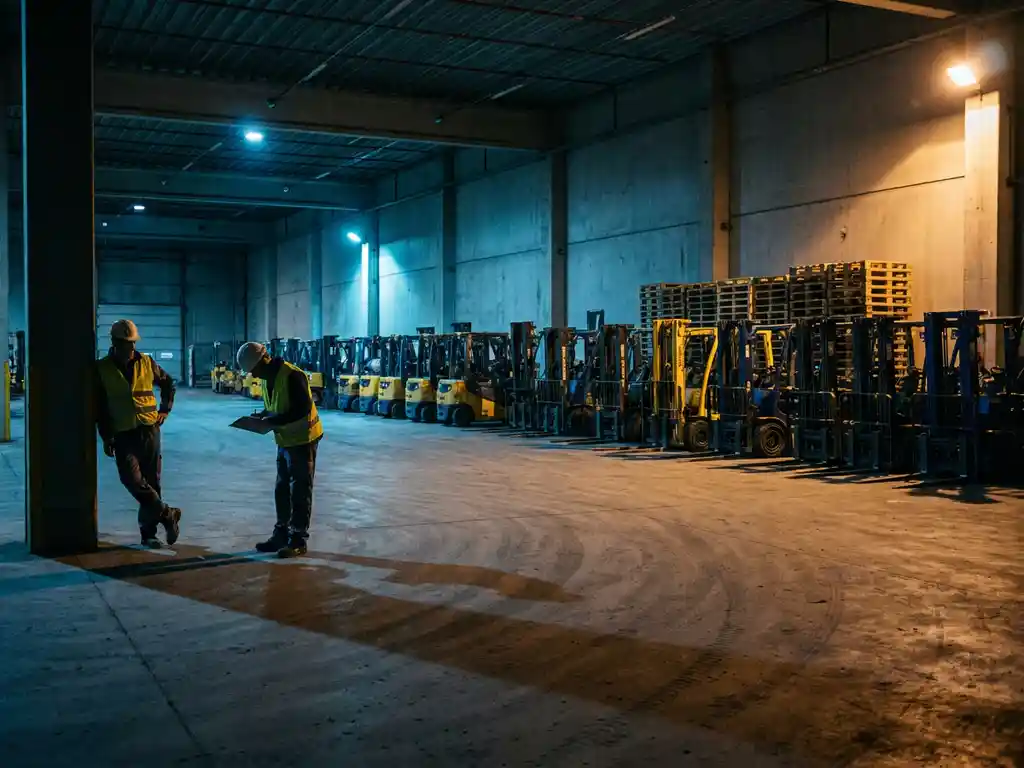
Labor shortages have quietly become one of the most disruptive forces in modern supply chains. Across Food & Agro, Manufacturing, CPG/Retail, and Logistics, companies are finding that workforce gaps do not stay neatly contained within HR departments. They cascade outward, slowing fulfillment, inflating costs, and exposing weaknesses in processes that once seemed stable. For senior leaders responsible for supply chain optimization strategies, understanding how workforce constraints interact with operational performance is no longer optional. It is a strategic priority.
The challenge is structural rather than temporary. Demographic shifts, skills mismatches, and rising competition for qualified workers mean that most large enterprises will continue to operate with some degree of labor scarcity for the foreseeable future. The organizations that manage this well are not simply hiring faster. They are redesigning their supply chains to perform reliably even when headcount is constrained.
How labor shortages ripple across supply chain operations
Workforce gaps create a chain reaction that touches nearly every node in a supply chain. When a warehouse is understaffed, picking accuracy drops, throughput slows, and order fulfillment windows stretch. When a procurement team is short-handed, supplier relationships become reactive rather than strategic. The ripple effect is not linear. It compounds across functions, making it harder to isolate and fix individual problems.
In logistics and distribution, driver shortages have already reshaped delivery windows and carrier negotiations across Europe and beyond. In manufacturing environments, losing experienced operators affects not just output volume but also quality consistency and equipment uptime. These disruptions hit demand forecasting optimization particularly hard, since irregular production and fulfillment patterns make historical data less reliable as a planning input. Organizations operating across a wide range of industries are feeling these pressures in distinct but equally significant ways.
The hidden cost of workforce gaps on supply chain efficiency
The most visible cost of labor shortages is overtime spend and temporary staffing fees. But the deeper costs are harder to see on a balance sheet. Increased error rates in warehouse operations lead to returns, rework, and customer dissatisfaction. Slower procurement cycles mean missed negotiation windows and reduced leverage with suppliers. Gaps in planning capacity result in inventory imbalances, either costly overstocks or damaging stockouts.
For CFOs and COOs, the compounding nature of these costs is the real concern. A 10% reduction in warehouse staffing does not translate to a 10% reduction in throughput. It can trigger a cascade of inefficiencies that erodes margins far more significantly. Inventory management optimization becomes particularly difficult when the people responsible for cycle counts, replenishment decisions, and exception handling are stretched too thin to act on data in time.
Why labor shortages accelerate supply chain technology adoption
Necessity has historically been a powerful driver of technology adoption, and supply chain is no exception. When workforce availability becomes unreliable, the business case for automation, advanced planning systems, and data-driven decision-making strengthens considerably. Labor constraints are pushing organizations to invest in tools that reduce dependency on manual processes without sacrificing operational control.
Warehouse optimization solutions such as automated picking systems, real-time inventory tracking, and AI-assisted slotting are seeing accelerated adoption among large enterprises. In planning functions, demand forecasting optimization platforms are replacing spreadsheet-based processes that require significant analyst time to maintain. Procurement process optimization tools are similarly gaining traction as teams look to automate routine supplier communications and approval workflows. Exploring the full range of available platform features can help organizations identify which capabilities deliver the most immediate relief under constrained staffing conditions.
The shift is not simply about replacing people. It is about amplifying the capacity of the people who remain. A smaller but well-supported planning team using advanced forecasting tools can outperform a larger team relying on manual processes. Technology becomes a force multiplier rather than a substitute.
Strategies to optimize supply chains despite labor constraints
Adapting supply chain operations to a constrained labor environment requires both tactical adjustments and structural rethinking. There is no single fix, but a combination of approaches can meaningfully reduce vulnerability.
Prioritize process standardization
Standardized processes reduce the knowledge dependency on individual employees. When procedures are documented, digitized, and embedded in systems, onboarding new workers becomes faster and the impact of turnover decreases. This is especially important in warehouse operations and procurement, where tribal knowledge often creates hidden single points of failure.
Invest in cross-functional planning capabilities
Siloed planning functions amplify the impact of labor shortages. When demand, inventory, and supply planning operate in separate teams with limited data sharing, each gap in headcount creates a blind spot. Integrated business planning approaches, supported by connected data architectures, allow smaller teams to maintain visibility across the full supply chain. This directly supports distribution network optimization by ensuring that routing and allocation decisions are based on real-time demand signals rather than stale assumptions.
Use data to focus scarce human attention
Not all supply chain decisions require the same level of human judgment. Exception-based management, supported by strong analytics, allows teams to concentrate skilled attention on the decisions that genuinely need it. Automated alerts for inventory anomalies, supplier performance deviations, or demand spikes free up planners and analysts to address root causes rather than chasing symptoms. Logistics optimization techniques built around exception management have proven particularly effective in environments where experienced staff are in short supply.
Building long-term supply chain resilience against workforce risk
Short-term tactics help manage the immediate pressure of labor shortages, but lasting resilience requires a longer view. Organizations that treat workforce risk as a permanent feature of their operating environment, rather than a temporary disruption, are better positioned to sustain performance over time.
Building resilience means designing supply chains with flexibility at their core. This includes developing supplier networks that can absorb capacity fluctuations, maintaining inventory buffers calibrated to realistic fulfillment variability, and investing in planning systems that can adapt to changing data inputs without requiring constant manual recalibration. It also means building internal talent pipelines and investing in skills development so that critical supply chain capabilities are not concentrated in a handful of individuals.
Workforce risk should sit alongside supplier risk, geopolitical risk, and climate risk in any serious supply chain risk framework. Organizations that conduct regular supply chain maturity assessments are better equipped to identify where labor dependency creates structural vulnerabilities before those vulnerabilities become operational crises. Structured implementation support can accelerate this process by ensuring that new tools and frameworks are embedded effectively across teams and systems.
How More Optimal helps with supply chain optimization under labor constraints
We work with CFOs, COOs, and Supply Chain Directors at large enterprises to redesign supply chains that perform reliably even when workforce conditions are challenging. Our approach combines strategic clarity with practical execution, helping organizations move from reactive firefighting to proactive resilience.
Specifically, we help organizations:
- Conduct supply chain maturity assessments to identify where labor dependency creates the greatest operational risk
- Design data foundations and governance frameworks that make planning processes less reliant on individual knowledge holders
- Integrate advanced optimization tools, including More Optimal and Relex, to amplify the capacity of leaner planning and operations teams
- Build integrated operating models that connect demand forecasting, inventory management, and distribution planning into a coherent, data-driven system
- Develop transformation roadmaps that sequence technology and process investments for maximum impact given real-world resource constraints
Labor shortages are not going away, but their impact on your supply chain performance is not fixed. If you want to understand where your organization is most exposed and what a practical path forward looks like, get in touch with our team to start the conversation.