
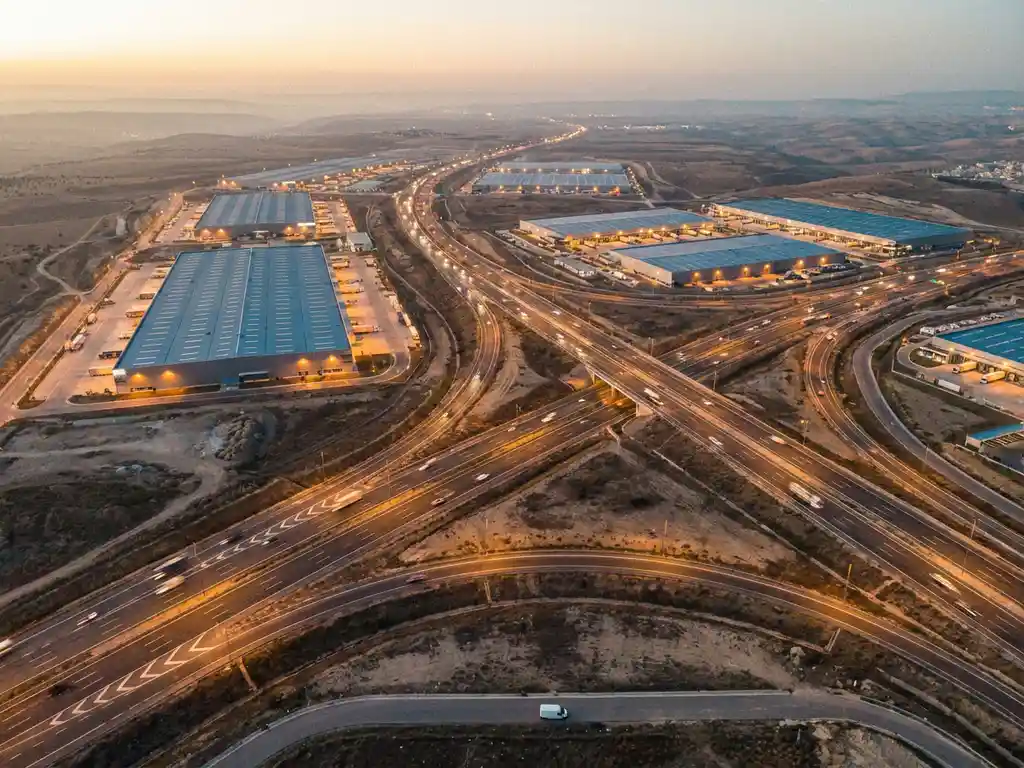
Most supply chain leaders know the pressure to cut last-mile costs. It shows up in board meetings, quarterly reviews, and every conversation about margin improvement. But focusing almost entirely on the final leg of delivery can quietly mask a far more expensive problem: a distribution network that was never designed to support the business it serves today. When the underlying network structure is misaligned, optimizing last-mile delivery is a bit like adjusting the thermostat in a building with no insulation. The savings are real but modest, and the root cause stays untouched.
Distribution network optimization addresses the structural layer of supply chain performance, and in 2026, that layer is under more pressure than ever. Shifting demand patterns, rising transport costs, nearshoring trends, and the growing complexity of omnichannel fulfilment all demand a more strategic view of how networks are designed and operated. This article explores why that broader lens consistently outperforms a narrow focus on last-mile savings, and what it takes to build a network that performs over the long term. At More Optimal, this is precisely the kind of structural challenge we help large enterprises tackle.
The hidden cost trap in last-mile thinking
Last-mile optimization is genuinely valuable. Reducing delivery costs, improving route efficiency, and shortening lead times all contribute to a better cost-to-serve. The trap is not in pursuing these gains but in treating them as the primary lever for supply chain improvement.
When organizations focus heavily on last-mile performance without addressing network structure, they often find that savings in one area are offset by inefficiencies elsewhere. Inventory held in the wrong locations drives up carrying costs. Poorly positioned distribution centres force longer trunk hauls before the last mile even begins. Fragmented fulfilment flows create operational complexity that no routing algorithm can fully resolve. The result is a supply chain that works harder and costs more than it should, even when last-mile metrics look healthy. Exploring the full range of platform features available for supply chain optimization makes clear how many of these structural inefficiencies can be addressed at their root.
How distribution network design shapes total cost-to-serve
Total cost-to-serve is the most honest measure of supply chain performance. It captures every cost associated with getting a product from source to customer, including procurement, warehousing, transportation, inventory, and service. Network design sits at the centre of this equation because it determines the physical and operational conditions under which all other costs are incurred.
The number and location of distribution centres, the flow paths between facilities, the balance between centralised and decentralised inventory, and the alignment between network structure and customer service requirements all shape total cost-to-serve in ways that last-mile decisions simply cannot. A well-designed network reduces transport distance across every leg, not just the last one. It positions inventory closer to demand without creating excess stock. It enables faster response to disruption because the structure itself is flexible rather than fragile.
Effective distribution network optimization also integrates closely with demand forecasting optimization and inventory management optimization. When network design is informed by accurate demand signals and inventory positioning logic, the entire supply chain operates with less waste and greater responsiveness. Understanding what we do at a structural level helps clarify why these disciplines must be pursued together rather than in isolation.
Where network optimization outperforms last-mile savings
The performance gap between structural network improvement and last-mile savings becomes most visible in three areas.
- Transport cost reduction across all legs: Repositioning a distribution centre or consolidating fulfilment flows can reduce total transport spend far more than route optimization alone. Shorter trunk hauls, better load consolidation, and reduced cross-docking all contribute to savings that compound across the entire network.
- Inventory efficiency: Network design directly influences how much stock needs to be held and where. A network that is aligned with actual demand patterns enables leaner inventory without sacrificing service levels, which is something last-mile improvements cannot achieve on their own.
- Service reliability: Structural network decisions determine lead times, fulfilment flexibility, and the ability to absorb disruption. Businesses that invest in warehouse optimization solutions and intelligent network design consistently outperform those that rely primarily on last-mile tactics when service pressure increases.
Logistics optimization techniques that operate at the network level also create a better foundation for procurement process optimization. When supplier relationships, inbound flows, and distribution structure are aligned, procurement can negotiate from a position of operational clarity rather than reactive urgency. The industries we serve span a wide range of sectors, each presenting its own structural complexity and unique optimization challenges.
Common mistakes in distribution network strategy
Even organizations that recognize the importance of network design often make avoidable errors in how they approach it.
Designing for today instead of tomorrow
One of the most common mistakes is optimizing a network for current demand patterns without accounting for how those patterns will evolve. A network that performs well under today’s volume and channel mix may become a liability within three to five years as customer expectations shift, new markets open, or fulfilment models change. Network design should always incorporate scenario modelling and demand forecasting optimization to stress-test assumptions about future conditions.
Treating network design as a one-time project
Distribution network strategy is not a project with a fixed end date. Markets change, cost structures shift, and operational realities evolve. Organizations that treat network design as a periodic exercise rather than an ongoing discipline tend to find themselves reacting to problems rather than anticipating them. Building a review cadence into supply chain governance is essential for maintaining network relevance over time.
Underestimating the data foundation
Reliable network optimization requires clean, granular data on costs, volumes, service requirements, and constraints. Many organizations discover mid-project that their data is fragmented, inconsistent, or simply not structured in a way that supports meaningful analysis. Investing in a strong data foundation before attempting network redesign is not optional. It is the difference between decisions based on evidence and decisions based on assumptions.
Building a resilient network for long-term performance
Resilience in distribution network design is not about building redundancy into every node. It is about creating a structure that can absorb variability, adapt to change, and recover quickly when disruption occurs, without sacrificing cost efficiency in normal operating conditions.
Practically, this means designing networks with flexibility in mind. That includes modular fulfilment capacity that can be scaled up or down, diversified supplier and distribution relationships that reduce single points of failure, and supply chain optimization strategies that account for geopolitical risk, regulatory change, and climate-related disruption. It also means aligning network structure with the organization’s broader strategic priorities, whether that is speed to market, cost leadership, sustainability, or service differentiation.
Long-term network performance also depends on how well the physical structure is supported by technology and governance. Warehouse optimization solutions, real-time visibility tools, and integrated planning platforms all amplify the value of a well-designed network. But technology alone cannot compensate for a network that is structurally misaligned. The foundation has to be right before the tools can deliver their full potential. Our implementation services are designed to ensure that both the structural and technological layers are addressed together, delivering improvements that are sustainable rather than superficial.
How More Optimal helps with distribution network optimization
We work with CFOs, COOs, and Supply Chain Directors at large enterprises to address exactly the kind of structural supply chain challenges described in this article. More Optimal’s approach combines rigorous analysis with practical execution, helping organizations move from reactive cost management to proactive network performance.
When we engage on distribution network optimization, our work typically includes:
- Cost-to-serve analysis to identify where the real cost drivers sit across the full network, not just in the last mile
- Supply chain maturity assessments to understand current network capabilities and where gaps exist relative to strategic ambitions
- Network design and scenario modelling to evaluate structural options and their impact on cost, service, and resilience
- Data foundation design to ensure the architecture and governance needed for ongoing optimization are in place
- Technology selection and integration, including advanced planning and optimization tools that make network improvements sustainable and measurable
We bring together strategy, optimization technology, and hands-on implementation support so that network improvements translate into lasting performance gains, not just a well-presented report. If your organization is ready to look beyond last-mile savings and address the structural drivers of supply chain performance, we would welcome the conversation. Plan a demo to see how our approach works in practice.