
Archieven: Insights

Professional businesswoman in navy suit examining stopwatch in modern warehouse with shipping containers and conveyor belts.

How long does supply chain optimization take?

Supply chain optimization typically takes 12–24 months for a comprehensive transformation, though simpler improvements may show results in 3–6 months. The timeline depends on your organization’s current maturity level, project scope, technology requirements, and change management complexity. Most successful optimization efforts follow a phased approach with measurable milestones throughout the journey. What factors determine how…

Lees meer...
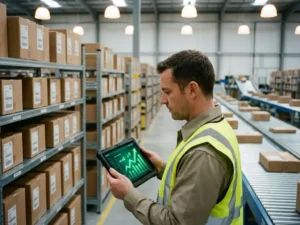
Warehouse manager reviewing performance dashboard on tablet showing upward trending charts in organized inventory facility

What metrics indicate supply chain improvement?

Supply chain improvement is measured through key performance indicators that track cost efficiency, operational excellence, customer satisfaction, and risk resilience. The most effective metrics include inventory turnover, on-time delivery rates, perfect order fulfillment, cost-to-serve analysis, and supplier performance scorecards. These indicators provide comprehensive visibility into transformation progress and competitive positioning across your entire supply chain…

Lees meer...
Professional analyst pointing at logistics data visualizations on multiple monitors in modern warehouse control room with robotic arms visible in background

How does AI help with supply chain optimization?

AI helps with supply chain optimization by using machine learning algorithms, predictive analytics, and automation to transform complex data into actionable insights. These technologies enable real-time decision-making, reduce operational costs, and improve efficiency across procurement, production, and distribution. Modern supply chains leverage AI to anticipate disruptions, optimize inventory levels, and enhance customer satisfaction through better…

Lees meer...
Executive at mahogany desk with laptop displaying supply chain analytics

What are the best supply chain optimization software tools?

Supply chain optimization software is a comprehensive technology solution that automates and enhances planning, forecasting, inventory management, and logistics operations across complex networks. These platforms combine advanced algorithms with real-time data to transform manual processes into intelligent, automated workflows. Modern enterprises rely on these tools to manage increasing complexity, reduce costs, and maintain a competitive…

Lees meer...
Manager in business suit pointing at wall screen showing global shipping routes in modern warehouse control room with multiple monitors displaying logistics data.

How do you implement end-to-end supply chain optimization?

End-to-end supply chain optimization involves systematically improving all processes—from supplier sourcing through final customer delivery—to create a unified, efficient operation. This comprehensive approach requires integrating strategy, technology, and data across your entire value chain rather than optimizing isolated components. Successful implementation depends on understanding your current capabilities, developing the right strategy, and managing transformation challenges…

Lees meer...
Person monitoring logistics data on multiple screens in modern warehouse control room with robotic arms moving packages

How does technology improve supply chain optimization?

Technology improves supply chain optimization by integrating digital tools, artificial intelligence, and automation to enhance efficiency, visibility, and decision-making across entire networks. Modern supply chain optimization technology transforms complex operations into streamlined processes that respond intelligently to demand changes, predict disruptions, and eliminate bottlenecks. These solutions combine advanced analytics with real-time data to create adaptive…

Lees meer...
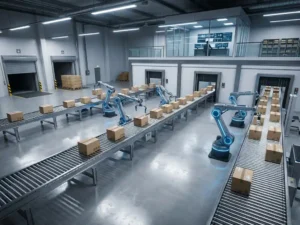
Modern warehouse with robotic arms placing components on conveyor belt while human supervisor monitors tablet nearby.

What are the principles of lean supply chain?

Lean supply chain principles focus on eliminating waste while maximizing value through systematic process improvement. These principles originated in lean manufacturing but now guide modern supply chain operations toward greater efficiency, lower costs, and improved customer satisfaction. Understanding these principles helps organizations transform complex supply chains into streamlined, responsive systems that deliver consistent results. What…

Lees meer...
Modern warehouse interior with robotic arms

What is lean supply chain management?

Lean supply chain management is a systematic approach that eliminates waste and maximises value throughout the entire supply chain network. It focuses on creating a smooth flow from suppliers to customers by removing inefficiencies, reducing inventory, and improving responsiveness to demand. This methodology transforms traditional supply chains into agile systems that deliver exactly what customers…

Lees meer...
Two business executives shaking hands over conference table with contract documents

What makes a supplier partnership successful?

Successful supplier partnerships thrive on mutual trust, shared strategic goals, and transparent communication that goes beyond traditional buyer-vendor relationships. These partnerships create competitive advantages through collaborative innovation, risk sharing, and aligned performance metrics. Effective supplier relationships require structured approaches to trust-building, performance management, and risk mitigation that strengthen both organizations. What are the fundamental elements…

Lees meer...
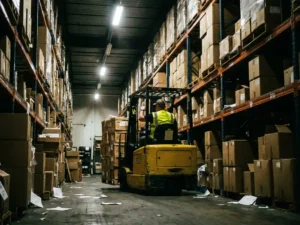
Forklift operator waiting in congested warehouse aisle with stacked cardboard boxes creating bottlenecks and scattered papers.

What causes production inefficiencies in supply chains?

Production inefficiencies in supply chains stem from multiple interconnected factors that disrupt operational flow and increase costs. The primary causes include demand forecasting errors, supplier relationship issues, outdated technology infrastructure, capacity constraints, and equipment breakdowns. Understanding these root causes helps supply chain leaders implement targeted solutions that restore efficiency and competitive advantage. What are the…

Lees meer...