Archieven: Insights

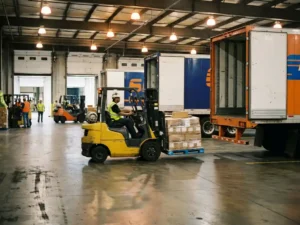
Warehouse worker operating forklift to transfer pallets from delivery truck to outbound trailer in cross-docking facility

How do you optimize cross-docking operations?

Cross-docking optimization transforms warehouse operations by eliminating traditional storage and directly transferring incoming goods to outbound transportation. This logistics optimization technique reduces handling costs by 15-30%, accelerates delivery times, and minimizes inventory holding expenses. Successful cross-docking requires precise coordination between inbound and outbound schedules, advanced technology systems, and strategic facility design to maximize throughput while…

Lees meer...
Warehouse manager arranging wooden blocks in pyramid formation on desk with tablet displaying inventory charts nearby

How do you optimize inventory levels?

Optimising inventory levels involves balancing carrying costs with service requirements through data-driven analysis of demand patterns, lead times, and business objectives. Effective inventory optimisation reduces waste while ensuring product availability, directly impacting cash flow and customer satisfaction. This comprehensive approach covers determining optimal stock levels, implementing proven techniques, and measuring success. What does inventory optimisation…

Lees meer...
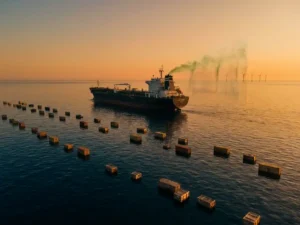
Cargo ship with green vapor trail navigating ocean waters past floating containers with wind turbines on horizon

What is supply chain carbon footprint optimization?

Supply chain carbon footprint optimization is the systematic process of measuring, analyzing, and reducing greenhouse gas emissions across all stages of a company’s supply chain operations. This comprehensive approach encompasses everything from raw material sourcing and manufacturing to transportation, warehousing, and end-of-life disposal, helping organizations minimize their environmental impact while maintaining operational efficiency. Why is…

Lees meer...
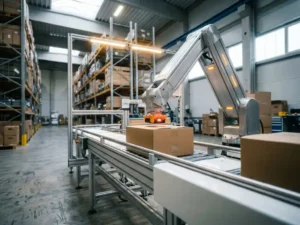
Robotic arm placing glowing sensor on cardboard package moving along conveyor belt in modern warehouse facility

How does IoT enhance warehouse automation?

IoT enhances warehouse automation by creating interconnected networks of smart sensors, devices, and systems that collect real-time data to optimize operations. These intelligent systems enable automated inventory tracking, predictive maintenance, and seamless coordination between robotic systems, ultimately transforming traditional warehouses into responsive, data-driven facilities that adapt to changing demands with minimal human intervention. Why are…

Lees meer...
Conductor's baton directing miniature cargo containers

What are the benefits of supply chain orchestration?

Supply chain orchestration is the strategic coordination and optimization of all interconnected processes, systems, and partners across your entire supply network to create seamless, intelligent operations. Unlike traditional management approaches that handle each function separately, orchestration creates a unified, responsive ecosystem where inventory management optimization, demand forecasting optimization, and logistics optimization techniques work together in…

Lees meer...
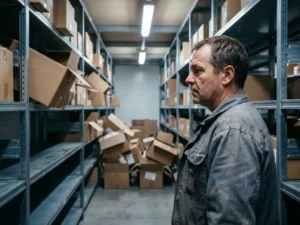
Warehouse manager examining disorganized cardboard boxes overflowing from metal shelving units in modern distribution center

How does poor forecasting affect supply chain costs?

Poor forecasting significantly increases supply chain costs through multiple direct and indirect pathways. When demand predictions are inaccurate, companies face excess inventory carrying costs, stockout penalties, emergency procurement expenses, and production inefficiencies. These forecasting errors create a cascade of financial impacts that extend beyond immediate operational costs to affect customer satisfaction, supplier relationships, and long-term…

Lees meer...
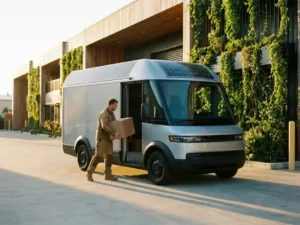
Electric delivery truck with solar panels parked at green-walled warehouse while worker loads recycled cardboard packages

How do you implement green logistics strategies?

Green logistics strategies transform traditional supply chain operations by integrating environmental considerations into transportation, warehousing, and distribution processes to reduce carbon footprints while maintaining operational efficiency. These approaches combine supply chain optimization strategies with sustainability goals, enabling companies to cut costs, meet regulatory requirements, and respond to growing consumer demand for environmentally responsible business practices.…

Lees meer...
Delivery truck driver organizing colorful packages by size in cargo bay

How do you optimize last-mile delivery costs?

Last-mile delivery optimization requires a strategic approach that combines route planning, delivery model selection, and performance measurement to reduce costs while maintaining service quality. By implementing advanced routing technologies, choosing cost-efficient delivery models, and tracking key performance indicators, companies can achieve significant reductions in their final delivery expenses while improving customer satisfaction. Why are inefficient…

Lees meer...
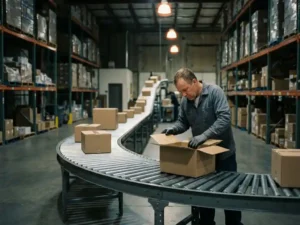
Warehouse worker examining returned packages on curved steel conveyor belt with organized shelving and warm industrial lighting

What is reverse logistics optimization?

Reverse logistics optimization is the strategic process of efficiently managing the flow of products, materials, and information from their final destination back to the point of origin or an appropriate recovery facility. This involves systematically planning, implementing, and controlling the backward flow of goods for purposes like returns processing, recycling, refurbishment, or disposal while maximizing…

Lees meer...
Warehouse worker looking concerned while reviewing clipboard surrounded by towering stacks of cardboard boxes in dimly lit storage facility

What are the costs of excess inventory?

Excess inventory costs represent the financial burden of holding stock beyond optimal levels, including storage expenses, obsolescence risk, and tied-up capital. These costs typically range from 20% to 30% of inventory value annually, driven by carrying expenses, opportunity costs, and operational inefficiencies. Understanding these costs helps organisations optimise working capital and improve supply chain performance…

Lees meer...