Archieven: Insights

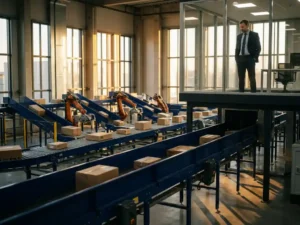
Modern warehouse with automated conveyor belts transporting packages while robotic arms sort items

What is supply chain as a service?

Supply chain as a service (SCaaS) is a comprehensive outsourcing model in which businesses partner with specialized providers to manage, optimize, and transform their entire supply chain operations through a combination of strategic consulting, advanced technology platforms, and ongoing operational support. Unlike traditional supply chain management, which focuses on individual components, SCaaS delivers end-to-end solutions…
Lees meer...
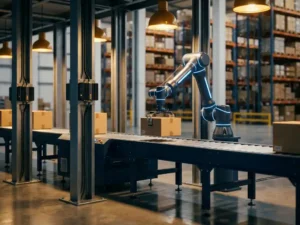
Robotic arm placing packages on conveyor belt in automated warehouse with edge computing devices and organized storage racks

How does edge computing improve warehouse efficiency?

Edge computing transforms warehouse operations by processing data locally on connected devices rather than sending it to distant cloud servers. This approach dramatically reduces response times, enables real-time decision-making, and creates more resilient warehouse automation systems that continue operating even when network connectivity is compromised. Why are network delays costing you critical warehouse productivity gains?…

Lees meer...
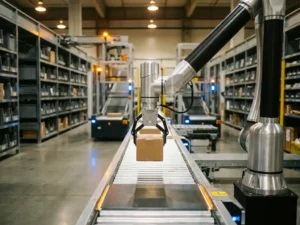
Robotic arm placing cardboard package onto conveyor belt in automated warehouse with organized shelves and sorting equipment

What are autonomous supply chain systems?

Autonomous supply chain systems represent the next evolution in supply chain management, using artificial intelligence, machine learning, and real-time data analytics to make independent decisions without human intervention. These self-governing systems continuously monitor supply chain performance, predict disruptions, and automatically adjust operations to optimize efficiency, reduce costs, and maintain service levels across complex global networks.…

Lees meer...
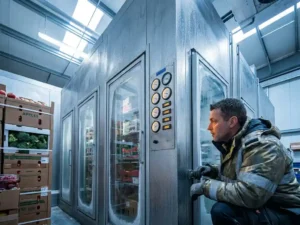
Warehouse worker in thermal gear monitoring temperature gauges on stainless steel refrigeration units with frost crystals and produce boxes visible

How do you optimize cold chain logistics?

Cold chain logistics optimization involves maintaining precise temperature control throughout the entire supply chain journey while minimizing costs, reducing waste, and ensuring product quality. This process requires integrated temperature monitoring, efficient routing, proper packaging, and real-time visibility across all touchpoints from production to final delivery. Why are temperature excursions costing you more than spoiled products?…

Lees meer...
Busy highway intersection with delivery trucks and vehicles in marked lanes

How to optimize transportation routes?

Transportation route optimization uses advanced algorithms and data analysis to determine the most efficient paths for vehicles, reducing costs while improving delivery performance. It considers factors such as traffic patterns, vehicle capacity, delivery windows, and fuel consumption to create optimal routing solutions. This systematic approach addresses common questions about implementing effective route optimization strategies for…

Lees meer...
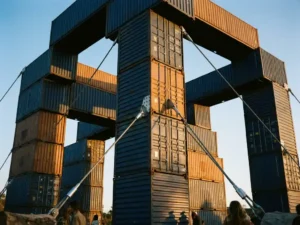
Interconnected metal shipping containers stacked in geometric patterns with steel cables forming web-like structure against blue sky

What is supply chain mesh architecture?

Supply chain mesh architecture is a decentralized, interconnected network approach that connects multiple supply chain nodes through flexible, real-time data flows rather than rigid, hierarchical structures. Unlike traditional linear supply chains, mesh architecture creates a web of interconnected suppliers, manufacturers, distributors, and customers that can dynamically adapt to disruptions and optimize performance across the entire…

Lees meer...
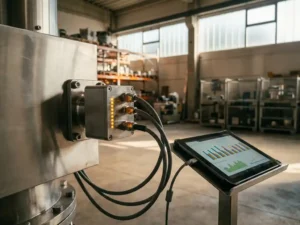
Industrial sensor with amber status lights mounted on steel machinery connected to tablet displaying performance graphs in modern warehouse

How does predictive maintenance reduce downtime?

Predictive maintenance reduces downtime by using data analytics and IoT sensors to monitor equipment health in real time, identifying potential failures before they occur. This proactive approach allows maintenance teams to schedule repairs during planned downtime windows, preventing unexpected breakdowns that can halt production lines and disrupt supply chain operations. By shifting from reactive to…

Lees meer...
Wooden boardroom table with sustainability reports featuring green leaf symbols and environmental charts

What are supply chain sustainability metrics?

Supply chain sustainability metrics are quantifiable measures that track environmental, social, and economic performance across your entire supply network. These metrics help organizations monitor progress toward sustainability goals, identify improvement opportunities, and demonstrate accountability to stakeholders while supporting supply chain optimization strategies that balance operational efficiency with environmental responsibility. Why are hidden environmental costs undermining…

Lees meer...
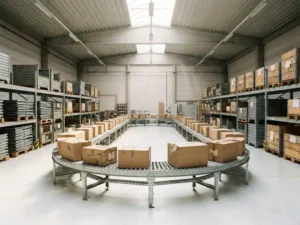
Circular conveyor system with worn cardboard packages flowing in continuous loop through organized warehouse with metal containers and wooden pallets

How do you implement zero-waste supply chains?

Implementing zero-waste supply chains means redesigning your operations to eliminate waste at every stage, from raw materials to end-customer delivery. This approach combines circular economy principles with advanced supply chain optimization strategies to reduce environmental impact while improving operational efficiency and reducing costs. Why are hidden waste streams costing you more than visible inefficiencies? Most…

Lees meer...
Topographical map on wooden desk with colored pins marking distribution points connected by red threads

What is hyperlocal supply chain optimization?

Hyperlocal supply chain optimization is a strategic approach that focuses on creating ultra-responsive, geographically concentrated networks that can adapt to local market conditions, customer preferences, and operational constraints in real time. This methodology emphasizes proximity-based sourcing, localized inventory management, and region-specific demand forecasting to minimize lead times while maximizing service levels and operational efficiency. Why…

Lees meer...